
Peptides have become one of the most talked-about tools in health optimization and integrative medicine. Clinicians are prescribing them. Biohackers are experimenting with them. Patients are asking about them in every practice that touches longevity, performance, and chronic illness. For good reason - the science behind peptide therapy is legitimate, the clinical results in the right context are real, and the range of applications continues to expand.
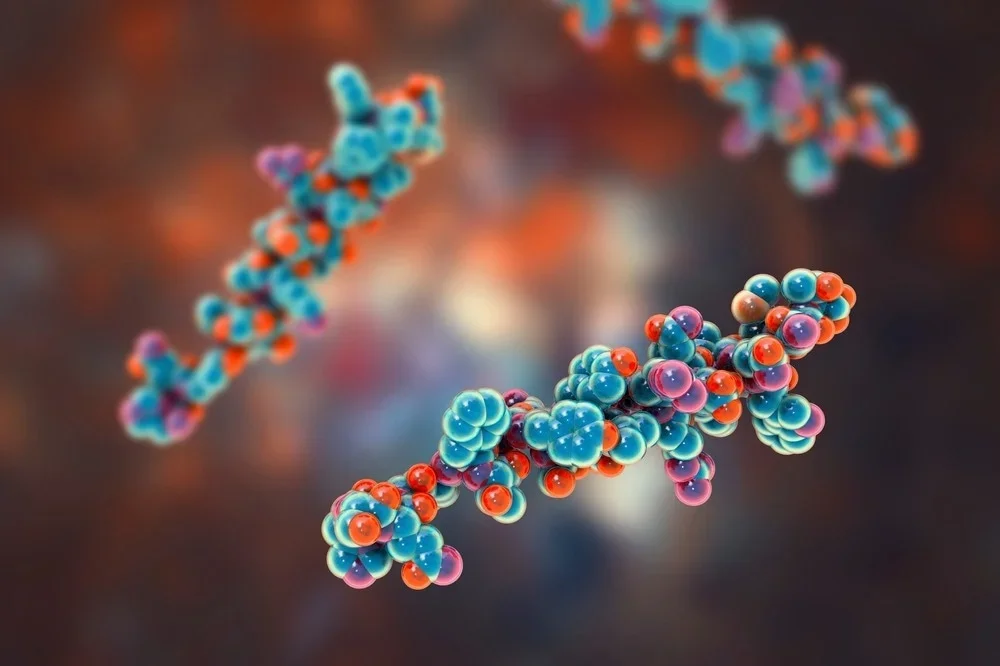
I am not here to argue against peptides.
What I want to talk about is something that almost never comes up in these conversations: the environment the peptides are working in. Because here is what most people miss. Peptides are signaling molecules. They do not act directly on cells the way a drug does. They communicate. They send instructions. They initiate cascades. And like any signal, their effectiveness depends entirely on the quality of the medium through which they travel and the ability of the receiving tissue to interpret and respond to what they are saying.
A perfect signal sent through a degraded environment produces a degraded result.
This is not controversial. It is basic physiology. And yet it is almost never discussed when practitioners and patients talk about peptide therapy.
What Is the Extracellular Matrix?
Most people have never heard of the extracellular matrix outside of academic biology. But it is one of the most important structures in the body, and it is central to understanding why peptides work the way they do - or why they don't.
The extracellular matrix (ECM) is the dynamic, living environment that surrounds every cell in the body. It is not empty space. It is a highly organized web of proteins, glycosaminoglycans, signaling molecules, water, and minerals that performs functions essential to life.
The ECM acts as:
A transport medium for nutrients, hormones, and signaling molecules
An immune signaling interface
A buffering system for pH and electrical charge
A metabolic waste clearance pathway
Think of it as the functional soil of the body. It surrounds every cell and is the primary terrain from which all physiological processes interact. When this terrain loses movement, therapies that should work often produce only partial results. This is one of the central principles of European Biological Medicine, and it is precisely why we place such strong emphasis on drainage as a foundational clinical step.
What Happens When the Matrix Becomes Congested
Over time, through accumulation of metabolic waste, chronic inflammatory signaling, environmental toxin burden, poor hydration, and mineral depletion, the extracellular matrix begins to stiffen and lose its capacity for movement.
Fluid that should flow freely through connective tissue becomes sluggish. Waste products that should be cleared accumulate in the interstitial space. The matrix becomes:
Biochemically burdened - saturated with metabolic byproducts and environmental toxicants
Hypoxic - cells are no longer receiving adequate oxygen
Acidic - the buffering capacity that maintains optimal pH for enzymatic function begins to fail
Dehydrated and electrically unstable - the structured water component of the ECM breaks down
Functionally blocked in its drainage pathways - lymphatic flow becomes impaired
In this state, the ECM is no longer performing its primary regulatory function. Immune signaling becomes distorted. Nutrient delivery is impaired. Cellular waste removal is incomplete. And critically - receptor sensitivity begins to decline. Cells sitting in a congested, hypoxic, acidic terrain do not respond to signals the way cells in a healthy terrain do.
This is the environment that many people are introducing peptide therapy into. And then wondering why the results are inconsistent, partial, or not sustained.
Why This Matters for Peptides
Bringing peptides back into the picture.
GLP-1 agonists signal metabolic regulation. BPC-157 signals tissue repair. Thymosin beta-4 signals immune modulation and recovery. Epithalon signals epigenetic regulation. Whatever the mechanism, the fundamental action is the same: a peptide communicates something to target tissues, and those tissues respond.
The response depends on two things. First, the signal must actually reach the target tissue. In a congested extracellular matrix - where fluid movement is sluggish, where the interstitial space is packed with accumulated waste, where microcirculation is compromised - the distribution of a peptide signal to its intended destination is impaired. The signal gets lost in the noise of a congested terrain.
Second, the target tissue must be capable of responding. Receptor sensitivity is not fixed. It is a function of the cellular environment. Cells bathed in hypoxic, acidic, inflamed tissue express their receptors differently than cells in a well-oxygenated, well-mineralized, well-hydrated terrain. In a congested ECM, the very cells you are trying to signal with peptide therapy may be less capable of receiving and acting on that signal.
The practical result is what practitioners and patients experience regularly: peptide doses that need to be escalated over time to maintain effect, inconsistent responses that vary without clear cause, initial improvement that plateaus early, or no meaningful response at all despite using a legitimate compound at appropriate doses.
These outcomes are not primarily a problem with the peptide. They are a problem with the terrain.
The 9 Pillars of Detoxification - Building the body’s true Foundation
Before introducing peptides or any advanced therapeutic, the foundations of detoxification physiology need to be in place. In my clinical practice I work from a framework I call the 9 Pillars of Detoxification. These are not general wellness tips. They are physiological prerequisites that determine whether the terrain is capable of responding to any intervention.
1. Avoid and Eliminate Reduce incoming toxic burden. Eat organic. Avoid plastics in food storage, water bottles, and packaging. Filter your water and your air. Eliminate synthetic fragrance from your home and personal care products. These are not optional lifestyle preferences - they are the difference between a terrain that is continuously being loaded and one that has a chance to clear.
2. Water The extracellular matrix is predominantly water. Its viscosity, its electrical properties, and its capacity to move fluid and signals are directly dependent on adequate hydration at the cellular level. Aim for at least 60 ounces of filtered water daily with a pinch of Himalayan sea salt per liter for mineral support. For advanced hydration, European mineral waters- Gerolsteiner, Pellegrino, Borjomi - and Quinton Isotonic sea plasma provide the structured mineral profile the ECM requires. EZ water, or exclusion zone water, is the primary form of water that comprises the ECM. It is generated by infrared light exposure, vegetable juices, and colloidal minerals. This is one reason sunlight, saunas, and green juices matter physiologically - not just for wellness, but for matrix hydration.
3. Fiber The gut is the final exit point of the entire drainage system. Bile from the liver, which carries transformed toxins, needs to be bound in the gut and eliminated. Without adequate fiber - aim for 30 grams daily - those toxins are reabsorbed through enterohepatic circulation and recirculated back into the system. Psyllium husk and high-quality fiber supplements can be helpful additions, particularly during an active drainage protocol.
4. Movement The lymphatic system has no pump. It depends entirely on muscular contraction, breathing, and postural changes to move fluid through its vessels. Five to ten thousand steps per day is the minimum for maintaining basic lymphatic flow. Additional aerobic exercise and resistance training not only improve lymphatic drainage but independently support all major systems involved in detoxification and regulation. Resistance training is also a prerequisite for the muscle building peptides.
5. Diet During any active cleansing or drainage period, a whole foods plant-based diet is strongly advisable. Avoiding sugar, processed foods, fried foods, GMO seed oils, alcohol, and limiting dairy and red meat reduces the ongoing acidification of the ECM. Dr. Thomas Rau's Swiss Secret Diet, which emphasizes alkaline, anti-inflammatory, low-protein plant-based eating, is specifically designed to reduce hyperacidity of the tissues and ECM - the exact condition that impairs peptide signaling.
6. Sleep Sleep is when the brain's glymphatic system - its lymphatic drainage network - clears metabolic waste from neural tissue. This is a drainage process that only occurs in deep sleep. Poor sleep quality is not just a fatigue issue. It is a drainage issue. Aim for eight hours, consistent sleep and wake times, a cool dark room, and no screens or caffeine in the hours before bed.
7. Breathe Conscious breathing activates the parasympathetic nervous system - the rest, digest, and detox mode. Parasympathetic tone is concentrated on the exhale, which is why extended exhalation breathing patterns are so effective. A simple practice: inhale for a count of four, hold for four, exhale for eight, hold for four. Repeat for ten minutes daily. Chronic sympathetic activation constricts microcirculation and impairs lymphatic flow. You cannot drain efficiently while chronically stressed.
8. Quiet the Mind Nervous system regulation is not a soft recommendation in this context. It is a physiological prerequisite for terrain health. Fifteen minutes of daily quiet sitting - no phone, closed eyes, focused on the breath - consistently shifts the nervous system toward parasympathetic dominance, which is the mode the body needs to complete its regulatory and clearance processes.
9. Drainage The ninth pillar is drainage itself - the use of natural European biological remedies that specifically support the primary organs of detoxification in the correct sequence. This is where the physiology becomes clinical.
Priming the Matrix with Drainage Remedies
European Biological Medicine has developed a sophisticated set of clinical tools for supporting each step in the drainage sequence. These are not aggressive detoxification agents. They are low-dose biological preparations - homeopathic, herbal, and energetic formulations - that gently restore movement and regulatory function at each level of the terrain without overwhelming the system's clearance capacity.
A complete drainage protocol always works in sets of four, addressing the four primary organs of elimination in sequence:
ECM - supported first, to mobilize toxins out of deep storage
Lymph - to transport them toward the processing organs
Liver and Kidneys - to transform and filter them for elimination
Gut - the final exit point, where waste leaves the body as stool
One of the Italian drainage companies I work with clinically, and whose remedies I recommend to patients and teach in my practitioner course, is GUNA Biotherapeutics, based in Milan. Founded in 1983, GUNA is a leading pharmaceutical company specializing in complementary and integrative medicine. Their remedies are available through the practitioner site Fullscript. A standard GUNA drainage protocol uses four remedies in combination:
GUNA Matrix Detox - ECM support
GUNA Lympho Detox - lymphatic drainage
GUNA Deep Cleanse - liver and kidney support
GUNA Bowel Plus - gut and elimination support
For a prevention and longevity protocol in a healthy individual, one round is typically 30 to 60 days. For those dealing with chronic illness, 90 days minimum is recommended, and some complex cases may require six months or more of ongoing drainage support to fully reduce the total toxic burden. Ideal maintenance drainage is done twice yearly - once in the spring and once in the fall.
Whenever beginning drainage, mineral supplementation is important. Oligo-minerals - low-dose colloidal mineral suspensions - support the ECM directly and aid in the drainage of accumulated toxins from the interstitial space. I include a colloidal trace mineral complex through my Fullscript account.
The Soil and the Seed
The analogy I use with patients is this: peptides are the seeds. The extracellular matrix is the soil.
You can have the highest quality seeds in the world - the best genetics, the best formulation, the best delivery system. But if the soil they are planted in is depleted, acidic, poorly oxygenated, and full of accumulated waste, those seeds will not perform the way they were designed to. Improve the soil first. Then plant.
This is not a metaphor. It is a physiological reality. When you reduce total toxic load, support drainage pathways, and restore movement in the ECM, several things change measurably. Microcirculation improves, which means peptide compounds distribute more effectively to their target tissues. Receptor expression normalizes in a less inflamed cellular environment. Inflammatory background noise decreases, which means the specific signaling peptides are designed to initiate is no longer competing with chronic inflammatory cascades.
Peptides will work better. Your other therapies will work better. And the results you have been chasing will become more consistent, more predictable, and more sustained.
If You Are an Individual Considering Peptide Therapy
If you want to understand whether your terrain physiology may be affecting your current results - or how to properly prepare your body before beginning a peptide protocol - I work with patients one-on-one through online wellness consults. We review your history, symptoms, and labs, design a personalized drainage and detox strategy, and build the physiological foundation that makes every other intervention work better.
You can learn more and book a consultation at drmarkiwanicki.com/work-with-me.
For Licensed Healthcare Practitioners
If you are an ND, MD, DC, LAc, NP, DO, or allied health professional and the physiology in this article resonates with patterns you are seeing in your own complex chronic cases - patients who plateau despite intelligent protocols, who respond partially but never fully resolve - I teach this framework in detail in a free clinical training called The Matrix Reset: Why Chronic Cases Stall and the Missing Role of Drainage in Chronic Disease. The training covers the clinical model behind everything discussed in this article and introduces the drainage sequencing framework I use in practice.
For practitioners ready to go deeper, this is the foundation of my full clinical training - Foundations of European Drainage - a structured practitioner course covering the complete clinical system for restoring biological regulation in complex chronic cases, including remedy selection, organ sequencing, dosing strategies, healing reaction management, and real clinical protocols.
The following information does not constitute medical advice from Dr. Mark Iwanicki ND, LAc. It is intended as general health and wellness educational content only and is not intended to treat, cure, or prevent any medical condition. Please consult with your primary healthcare provider prior to starting any new supplement regimen. Women who are pregnant or nursing should not take drainage remedies.
Dr. Mark Iwanicki is a naturopathic doctor and acupuncturist specializing in European Biological Medicine and clinical drainage. He teaches practitioners how to apply matrix physiology and drainage sequencing to improve outcomes in complex chronic disease.